
Around The Moon and Why You Need to this Mug

For the first time in more than 50 years, humans are flying around the Moon again. The Artemis II astronauts have traveled farther from Earth than anyone since Apollo, capturing breathtaking views of the Moon’s far side and reminding us why space exploration still inspires us all.


2 min read

Artemis II astronauts standing in front of NASA SLS rocket before the 2026 moon mission

🚀 Humans are flying around the Moon again.
Read our latest post on the Artemis II astronauts seeing the far side of the Moon.

🌍🚀👨🌑

If you are a space nerd, and who isn't, read on.

Remember that saying, "I Love You to the Moon and Back!"? I guess this sentence has been uttered a lot, especially with the crew on Artemis II. Well, it's been fifty-plus years, and I've aged a thousand years, but what can I say... I look pretty good for my age. 😉

Artemis II is the first crewed mission to fly around the Moon since Apollo, sending astronauts farther from Earth than any humans in over 50 years.

Four brave humans (one of them is Canadian) in space have united us, people on Earth, and made us excited to learn about science and space, just like kids in school.

1. Why is NASA going to the Moon again?
https://www.npr.org/2026/04/01/nx-s1-5767087/space-moon-mission-launch-artemis

2. On Monday, the Artemis II astronauts were the first people ever to see the dark side of the Moon.… And yes… I can't help but listen to this song:
https://www.youtube.com/watch?v=k9ynZnEBtvw

3. The official Artemis II wake-up song playlist is here:
https://open.spotify.com/playlist/0WO94bzZeuUun777vv6UJu

4. Astronauts Can Observe the Moon in Ways Robots Can’t  
During the lunar flyby, astronauts visually examined about 30 lunar features, including craters and maria.

5. Deep-Space Communications With Earth Are Reliable  
Artemis II demonstrated long-distance communications, including a record-breaking call between Orion and astronauts aboard the International Space Station across roughly 230,000 miles.

6. Astronauts saw the Moon’s far side under different lighting than Apollo ever saw, revealing terrain features that look very different from earlier photographs.

If you haven't seen any of the images, here are a few:

  • Reid Wiseman
  • Victor Glover
  • Christina Koch
  • Jeremy Hansen (Canada’s first lunar astronaut 🇨🇦)

images via 

NASA’s Artemis II
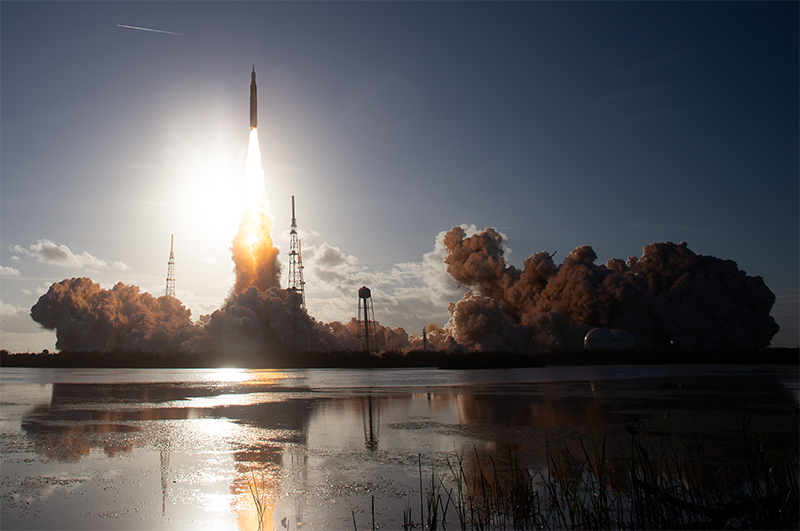
Artemis mission rocket launch as NASA’s Space Launch System lifts off in a bright plume of fire and smoke.
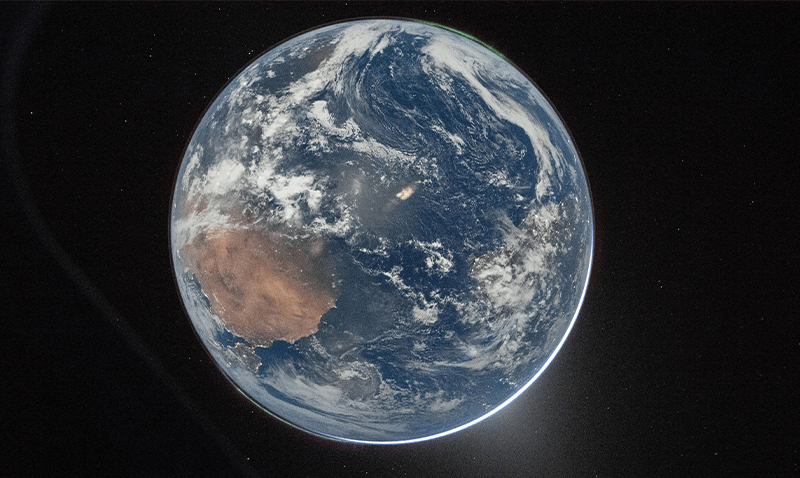
View of Earth from space during NASA’s Artemis Moon mission.
{p}(April 6, 2026) – As the Artemis II crew came close to passing behind the Moon and experiencing a planned loss of signal, they captured this image of a crescent Earth setting on the Moon’s limb.{/p}{p}The edge of the visible surface of the Moon is called the “lunar limb.” Seen from afar, it almost looks like a circular arc – except when backlit, as in other images captured by the Artemis II crew.{ } Credit: NASA{/p}
Artemis II astronauts wearing eclipse glasses during their mission around the Moon.The Moon silhouetted against the Sun with a glowing halo during NASA’s Artemis mission.

the Milky WayCaptured by the Artemis II crew, the heavily cratered terrain along the eastern edge of the South Pole–Aitken basin appears beneath the lunar terminator—the boundary between day and night on the Moon. The South Pole–Aitken basin is the Moon’s largest and oldest impact basin, revealing clues to its ancient geologic history billions of years old.In this view of the Moon, the near side (the hemisphere we see from Earth), is visible at the top half of the Moon disk. It is identifiable by the dark splotches. These are ancient lava flows from a time early in the Moon\u2019s history when it was volcanically active. The large crater that appears below the lava flows, dark in the center, is Orientale basin, a nearly 600-mile-wide crater that straddles the Moon\u2019s near and far sides as is partly visible from Earth on the edge of the Moon. In this image, we have a full view of the crater. Everything below the crater is the far side, the hemisphere we don\u2019t get to see from Earth because the Moon rotates on its axis at the same rate that it orbits round us. Credit: NASA
The Artemis II astronauts inside the Orion spacecraft with U.S. and Canadian flags during the Moon mission.

And finally... why you need the Colour Changing Astronaut Mug.
There’s really only one reason: you need coffee in space… and on Earth too, especially in this cool novelty mug!

Colour-changing astronaut helmet mug inspired by NASA space missions.

Colour-changing astronaut helmet mug revealing an image of Earth when filled with hot coffee.
If you enjoy space-themed gifts, you might also like our collection of funny mugs. Click here:

Leave a comment

Please note, comments need to be approved before they are published.